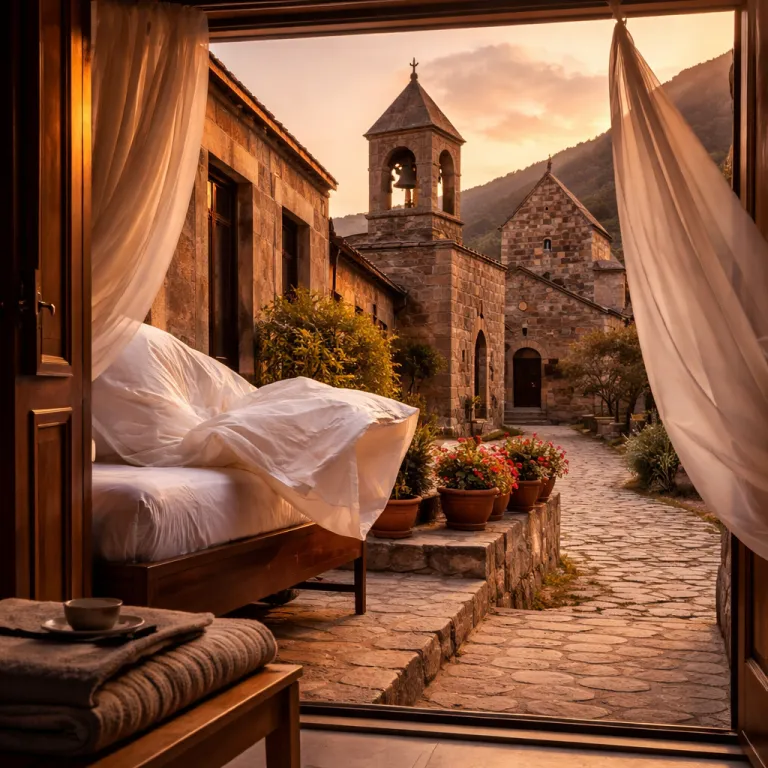
Monastery stays in Armenia: where stone chapels meet soft sheets
Armenia rewards the traveler who slows down and lets the monasteries set the rhythm of each day. In a country where a medieval monastery crowns almost every ridge, staying near these sacred complexes turns a simple hotel booking into a layered cultural experience. The most memorable monastery lodgings in Armenia feel like a discreet house of hospitality wrapped around a working church, not a theme park.
Across Armenia, only a handful of monastery-style hotels operate, yet they anchor some of the country’s most atmospheric valleys. Many occupy restored monastic outbuildings or a former house hotel built in the Soviet era, now reimagined with modern comforts and restrained design. This is where house guests wake to bells rather than traffic, and where a short walk of a few minutes replaces long transfers by car.
For travelers interested in depth rather than box ticking, these stays change how people experience Armenia’s spiritual landscape. A single night near a monastery becomes a quiet retreat, with time to read, reflect and watch the light move across khachkars, the carved cross stones that define Armenian sacred art. When you find the perfect balance between heritage and comfort, the room becomes part of the pilgrimage rather than a neutral backdrop.
What makes a monastery stay different from a regular hotel
Monastic guesthouses and cloister-adjacent hotels in Armenia sit inside or beside active religious sites, so the atmosphere feels closer to a lived-in house than to a conventional resort. You share space with clergy, villagers and pilgrims, not only with other hotel guests, and that mix of people shapes every interaction. The result is an experience that is quieter, more contemplative and often more emotionally charged than a standard city hotel night.
Most properties keep the original stone walls and timber roofs, then layer in discreet heating, good mattresses and private bathrooms. The best house hotel conversions respect the monastic scale, avoiding oversized rooms and instead offering compact spaces that frame the forest or canyon outside. When you open your window at dawn, you hear roosters, distant bells and sometimes the low murmur of liturgy carried on the wind.
Practical details matter as much as romance when you plan a retreat around a monastery. Many monasteries are free to enter, but the hotels beside them can fill quickly during religious holidays and long weekend breaks in Armenia. Always read recent guest reviews carefully, because standards vary and you want to find the perfect match between your comfort expectations and the property’s simple, heritage-driven character.
Geghard and Garni: basalt gorges, sacred caves and refined bases
The Geghard monastery complex, partly carved into the rock, is one of Armenia’s most powerful sacred sites. A short drive away, the Hellenistic temple of Garni stands above a basalt gorge, making this valley ideal for a two-day circuit with a single hotel base. Staying nearby lets you walk into Geghard in the early morning, when the gates first open and the chapels are still lit only by candles.
There are no rooms inside Geghard itself, so travelers book small guesthouses and premium villas in Garni village or along the gorge. These properties range from simple family house stays to polished house-hotel-style lodgings with pools and panoramic terraces facing the cliffs. For a luxury city contrast before or after your monastery circuit, consider a night at a refined Yerevan property such as the Alexander Hotel in Yerevan, then head east for your rural retreat.
When you plan this leg of your monastery-focused journey, think in terms of light and crowds. Aim to reach Geghard within thirty minutes of opening time, then return in the late afternoon for a second walk when tour buses have gone. During the middle of the day, relax at your hotel, read about the site’s history, and talk with people from the village who can share details about seasonal rituals and feast days.
Cultural etiquette and practical notes around Geghard
Armenia is often described as the world’s first Christian nation, and that history lives in the way people move through monasteries. Dress modestly, covering shoulders and knees, and keep your voice low inside the chapels, even if other guests forget. Photography is generally allowed, but avoid flash during services and always ask before photographing individuals at prayer.
Most Garni and Geghard area hotels are family run, so the line between private house and guest space can feel fluid. You might be invited into the kitchen to taste homemade apricot brandy or to share a late-night tea with house guests returning from a wedding. If you are interested in monastic music, ask your host to help you find details of upcoming liturgies, as hearing the choir in the rock-cut church is an experience that stays with you long after the trip.
For broader context on how Armenia is reshaping its tourism infrastructure around heritage corridors, consult publicly available material from the Armenian Tourism Committee, UNESCO World Heritage Centre entries on Armenian monasteries, and World Bank reports on tourism development. Understanding these dynamics helps you appreciate why some monastery lodgings feel newly polished while others still carry the patina of the Soviet era. Either way, the combination of raw stone, incense and attentive hospitality defines this part of your route.
Tatev and Goris: aerial tramways, canyon views and village guesthouses
Far to the south, Tatev monastery sits on a basalt promontory above the Vorotan Gorge, reached by the Wings of Tatev aerial tramway or a winding mountain road. Spending at least one night in nearby Goris or Tatev village turns a rushed excursion into a layered retreat, with time to walk the canyon paths and watch the monastery shift from day to night. Here, monastery stays in Armenia lean toward intimate guesthouses and small inns rather than large complexes.
In Tatev village, properties such as Tatev Guesthouse and Old Wings Guesthouse offer simple rooms, warm hosts and direct views toward the medieval monastery walls. These are not luxury hotels, but they deliver something rarer for interested travelers who value authenticity over marble lobbies and long spa menus. You wake in a modest room, step outside the house, and within minutes you are on the path that leads to the monastery’s main gate.
Goris, about forty minutes away by car, provides a slightly more polished base with a wider choice of hotel categories. Many travelers split their stay, spending one night in a Goris house hotel with better amenities and another night in Tatev village for the full immersion experience. When you read guest reviews, pay attention to heating, water pressure and noise, because these practical details can shape your memory of the retreat as much as the view.
Planning your Tatev monastery days
To avoid crowds, ride the Wings of Tatev cable car on the first or last departure of the day. This timing gives you soft light for photography and a quieter monastery courtyard, especially outside peak holiday periods in Armenia. If you prefer to drive, the road offers dramatic canyon views, but allow extra minutes for photo stops and occasional livestock on the route.
Once at Tatev, give yourself at least half a day to explore the complex and its surroundings. Walk the perimeter walls, step into the refectory and then find a quiet corner to read about the monastery’s role in medieval Armenian scholarship. Many people underestimate how much time they will want simply to sit, watch the changing sky and absorb the silence that settles after tour groups leave.
Back in Goris or Tatev village, evenings tend to be low key, centered around the guesthouse table. House guests share stories over stewed lamb, homemade wine and thick yogurt, turning a simple night into a small cultural salon. For travelers building a longer itinerary, pairing Tatev with northern monasteries such as Haghpat and Sanahin creates a satisfying multi-day arc through Armenia’s spiritual geography.
Haghpat, Sanahin and Dilijan: northern stones and forest retreats
The twin UNESCO-listed complexes of Haghpat and Sanahin in northern Armenia form one of the country’s most compelling monastic landscapes. Both are classic examples of Armenian monastery architecture, with clustered churches, scriptoria and bell towers set against deep green hills. Staying nearby allows you to walk between chapels at different times of day, watching mist rise from the Debed Gorge.
Accommodation around Haghpat and Sanahin ranges from simple village houses to small hotels in Alaverdi and Dilijan. In Dilijan, Vanatun Monastery Stay near Haghartsin offers a particularly atmospheric option, blending restored monastic buildings with modern amenities and a quiet forest setting. Here, the line between monastery hotels in Armenia and spiritual retreat centers blurs, as guests often come for several nights to read, write or simply reset.
When you plan this leg, consider structuring your days around light and logistics. Visit one monastery in the early morning, then drive the short distance to the other for a late-afternoon walk, leaving the middle of the day for rest at your hotel. The roads between Haghpat, Sanahin and Dilijan pass through former industrial zones from the Soviet era, but the reward is a string of stone complexes that have anchored Armenian identity for centuries.
How to move between the northern monasteries
Distances in northern Armenia look short on the map, yet winding mountain roads can stretch a thirty-kilometre drive into an hour. Build generous buffers into your day, especially if you want to stop for viewpoints or to photograph roadside khachkars. Hiring a local driver can be worthwhile, freeing you to read about each monastery’s history between stops instead of watching every bend.
Haghpat and Sanahin are close enough that some energetic travelers walk between them, but most people prefer to drive and then explore each complex on foot. Once parked, allow at least ninety minutes at each site, more if you are interested in architectural details or photography. The paths within the monasteries are uneven, so wear sturdy shoes and be prepared for short, steep sections.
In the evenings, Dilijan’s forested setting makes it an appealing base for longer stays, especially if you value a quiet house-style hotel over a busy city property. Many guesthouses here operate like extended family homes, with house guests sharing long tables and trading tips about lesser-known monasteries. For a contrasting urban chapter before or after your northern circuit, look at premium accommodation in Yerevan, then return to the highlands for another retreat.
Designing a multi day monastery route across Armenia
Rather than treating each monastery as a separate excursion, consider designing a multi-day route that strings several sites together with carefully chosen hotels. A classic arc for travelers interested in monastery stays in Armenia links Yerevan, Garni and Geghard, Tatev and Goris, then the northern pair of Haghpat and Sanahin with a Dilijan forest stay. This pattern balances driving days with slower retreat days, giving you time to inhabit each landscape.
Start with one or two nights in the capital, using a central hotel as your base for museums and restaurants before heading into the countryside. Then shift to smaller properties where the room count is low, the host might live in the same house, and the monastery is only a few minutes away on foot. Alternating between urban polish and rural intimacy keeps the experience fresh while still letting you find the perfect rhythm for your own pace.
When planning, map your days around no more than two major sites, allowing space for unscripted encounters. A conversation with a priest, an invitation into a village house or an unplanned walk to a nearby chapel can become the highlight of the trip. The goal is not to collect as many monastery names as possible, but to let a few places sink in deeply.
Reading, reviews and realistic expectations
Before you book, read a mix of professional hotel reviews and recent guest comments to calibrate your expectations. Monastery-adjacent properties in Armenia often offer basic comforts with modern facilities rather than full-scale luxury, and that simplicity is part of their charm. If you need certain amenities, such as strong heating or reliable Wi-Fi, check the details carefully rather than assuming every room will match a city standard.
Some travelers are surprised by how quickly day and night temperatures can shift in the highlands. Pack layers, including a warm sweater for evening walks between your hotel and the monastery, and remember that stone buildings hold cool air even in summer. A small flashlight or phone torch is useful for navigating unlit paths, especially if you stay for late services or linger to photograph the complex after sunset.
As summarized in public FAQ material from the Armenian Tourism Committee, monastery-area accommodation typically offers “basic comforts with modern facilities” and is generally considered suitable for families, with bookings made either through major travel platforms or directly with the property. These straightforward statements align with what seasoned travelers report on the ground, reinforcing the value of clear information and honest expectations when you plan your own retreat.
Frequently asked questions about monastery hotels in Armenia
Are monastery hotels in Armenia suitable for families with children ?
Yes, many monastery-adjacent hotels and guesthouses in Armenia welcome families. Rooms are often simple but spacious enough to add an extra bed, and outdoor areas give children space to walk and play. Parents should supervise closely around steep paths and stone staircases inside each monastery complex.
How far in advance should I book a monastery stay ?
Booking at least a few weeks ahead is wise, especially for peak holiday periods and weekends. The total number of monastery-focused hotels in Armenia is small, so popular properties near Geghard, Tatev, Haghpat and Sanahin can fill quickly. For very specific rooms or house-hotel styles, contact the property directly to confirm availability and details.
What should I wear when visiting monasteries near my hotel ?
Dress modestly, covering shoulders and knees, and avoid overly bright or revealing clothing. Comfortable walking shoes are essential, because paths and steps are often uneven stone and can be slippery after rain. Carry a light scarf or shawl, which can be useful both for warmth at night and for extra coverage inside chapels.
Do monastery area hotels offer meals on site ?
Most guesthouses and smaller hotels near monasteries provide breakfast, and many offer home-cooked dinners on request. Menus tend to feature local Armenian dishes, seasonal vegetables and simple desserts rather than elaborate restaurant-style plates. If you have dietary restrictions, mention them clearly when you book and again when you arrive, as English-language menus may be limited.
Is it possible to stay inside an active monastery building ?
In Armenia, most accommodation is located in adjacent buildings or nearby villages rather than inside the main monastery churches themselves. Some properties occupy restored monastic outbuildings, blending historical architecture with modern rooms and bathrooms. Always check the hotel description and reviews to understand exactly how close your room will be to the active religious spaces.
Suggested sources for further reading : Armenian Tourism Committee and national tourism portals ; UNESCO World Heritage Centre entries on Armenian monasteries ; publicly available World Bank reports on tourism development in Armenia.