Zvartnots, Etchmiadzin and the origins of an Armenian monasteries visit
Your Armenian monasteries visit should begin where the story starts. In the plains of Armavir Province, near Vagharshapat, the ruins of Zvartnots Cathedral rise like a broken crown above vineyards, framing Mount Ararat in a way no camera fully captures. This circular cathedral, commissioned by Catholicos Nerses III the Builder, once soared around 45 meters and reshaped how a church could command space.
The site where King Trdat III met Gregory the Illuminator is not just another archaeological site ; it is the moment Armenia chose Christianity and began building churches and monasteries in stone rather than in memory. Official explanations on panels answer the question “What is the significance of Zvartnots Cathedral?” with the line : “It showcases unique 7th-century Armenian architecture.” That seventh century ambition, executed with meticulous stone masonry and traditional tools, later influenced Byzantine forms while remaining unmistakably Armenian.
Walk the circular foundations slowly and imagine the cathedral as a three tiered stone complex, its arches layered like a wedding cake of faith. From here, continue your visit to nearby Etchmiadzin Cathedral, the spiritual heart of the Armenian Apostolic Church and a UNESCO Heritage site that anchors many Armenian monasteries visits. The cathedral complex, dedicated to the Holy Mother of God, gathers churches, monasteries and seminaries across centuries, offering a compact lesson in how Armenian churches and monasteries evolved from early stone halls to more elaborate monastery complexes.
Geghard, Garni and the art of reading rock and light
Most itineraries from Yerevan pair Geghard Monastery with the pagan temple of Garni, but a thoughtful Armenian monasteries visit lingers longer in the gorge. Geghard Monastery, partly carved into the rock and partly built in finely jointed stone, is a monastery complex where acoustics, light and incense create a near theatrical experience. The main church, located at the entrance, leads to cave chapels where choirs sound as if they are singing from inside the mountain itself.
Geghard, formally listed as a UNESCO Heritage site, dates from several centuries, with the earliest cave chapels predating the main thirteenth century church. When you step into the rock hewn gavit, look up at the carved rosettes and crosses that seem to float above the dim interior, then notice how a single shaft of light picks out the stone dust in the air. This is where an Armenian monasteries visit becomes less about checking sites and more about understanding how Armenian architects used geology as a sacred material.
From Geghard Monastery, many travelers return directly to Yerevan, but couples with time should consider a slower route through the Ararat wine country. Pair your day of churches and monasteries with an evening focused on wine heritage by following this route tracing Armenia’s 6000 year wine story. The contrast between basalt carved sanctuaries and sunlit vineyards deepens your sense of how Armenia’s sacred and everyday landscapes have intertwined for centuries.
Noravank, Khor Virap and the drama of the southern canyons
Driving south from Yerevan, the road towards Noravank and Khor Virap threads through a landscape that feels purpose built for an Armenian monasteries visit. Khor Virap Monastery, located near the closed Armenia Georgia and Armenia Türkiye borders, sits on a hill directly facing Mount Ararat, with the Turkish side of the mountain looming impossibly close. Here, Gregory the Illuminator was once imprisoned in a pit, and the small church above that cell turns a simple stone structure into a site of national memory.
Many couples choose to visit Khor Virap at sunrise, when the light on Ararat is soft and the churches and monasteries of the plain are still quiet. From there, continue to Noravank Monastery, located at the end of a narrow red rock canyon where cliffs close in like theatre curtains. The thirteenth century Surb Astvatsatsin church, dedicated to the Holy Mother of God, is famous for its narrow external staircase and for a rare God the Father fresco above the entrance, an image that rewards slow, close looking.
Noravank’s stone shifts from pale cream to deep rust as the sun moves, so plan your visit for late afternoon when the canyon glows and the monastery centuries of carving work stand out in sharp relief. This region is also Armenia’s key wine corridor, and the government’s tourism strategy, documented in analyses such as the World Bank’s 200 million dollar tourism investment overview, is improving road conditions and signage between heritage sites. For luxury travelers, that means smoother transfers between monasteries, vineyards and high end guesthouses without losing the sense of remote, stone built sanctuaries.
Tatev Monastery, Wings of Tatev and staying well in the south
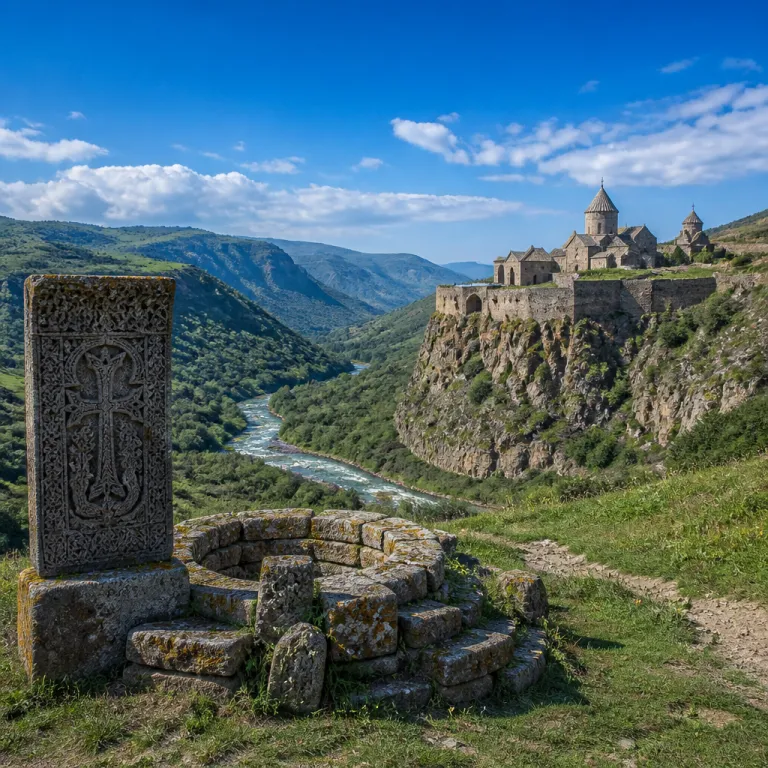
Further south, Tatev Monastery rewards those willing to stretch their Armenian monasteries visit into a multi day journey. Perched on a basalt plateau above the Vorotan Gorge, this monastery complex was built between the ninth and thirteenth centuries and once served as a major university of Armenia. Today, the most elegant way to arrive is via the Wings of Tatev, a 5.7 kilometer reversible aerial tramway that glides over the gorge in about twelve minutes.
The cable car cabins offer a slow, silent approach, letting you watch the monastery located on its cliff edge grow from a stone silhouette into a detailed ensemble of churches, refectory and defensive walls. Official guides often answer the question “How can I visit Tatev Monastery?” with the simple line : “Accessible via the Wings of Tatev cable car.” That is accurate, but for couples seeking a premium experience, the real luxury lies in timing your visit for golden hour, when the stone turns honey colored and the surrounding mountains layer into blue and violet bands.
Plan at least one night nearby rather than rushing back to Yerevan, because the monastery centuries of history deserve quiet evenings and early mornings. High end lodges and carefully restored village houses in Syunik Province now offer heated stone floors, local wine lists and views back towards the monastery complex. From here, you can extend your route towards the Armenia Georgia corridor or loop back through wine country, stitching Tatev Monastery into a broader circuit of Armenian churches and monasteries that feels both coherent and indulgent.
Haghpat, Sanahin and the northern monastery provinces
In the north, the Debed Canyon in Lori Province holds two of Armenia’s most intellectually important monasteries. Haghpat Monastery and Sanahin Monastery, both UNESCO Heritage sites, form a paired study in how Armenian architects refined the monastery complex over several centuries. Haghpat’s clustered churches and libraries feel introspective, while Sanahin’s elongated plan and sculpted details suggest a community looking outward towards trade routes and ideas.
For an Armenian monasteries visit focused on architecture, allocate a full day to walking between these sites rather than treating them as quick stops on an Armenia Georgia transfer. The stone here is softer and more weathered than at Noravank or Tatev, and the churches and monasteries are wrapped in meadows that turn emerald in spring and gold in autumn. Inside, look for low relief carvings of donors, cross stones and inscriptions that quietly record the monastery centuries of teaching, copying and debate.
Luxury minded couples will find that the region’s accommodation scene is catching up fast, with design forward guesthouses and small hotels overlooking the canyon. For a contrasting atmosphere, consider pairing Lori Province with Dilijan, often called Armenia’s little Switzerland, using this guide to spending longer in Dilijan in summer. Together, these northern sites show how monasteries Armenia are not isolated relics but part of living cultural landscapes where stone, forest and village life still interlock.
Lake Sevan, Dilijan and the art of slowing an Armenian monasteries visit
No Armenian monasteries visit aimed at couples should skip Lake Sevan, where water, light and stone create a different kind of sacred geometry. On a peninsula that was once an island, Sevanavank Monastery rises above the lake in dark volcanic stone, its compact churches catching the wind that races across the water. The monastery located here dates from the ninth century, and while the churches are modest, the panorama of lake and mountains turns every step into a viewpoint.
Plan to visit early in the morning, before day trippers arrive from Yerevan and before the sun flattens the colors of the water. From Lake Sevan, continue towards Dilijan National Park, where Haghartsin Monastery sits in a forested valley that feels almost Alpine, especially in mist. The churches and monasteries of this region, including Haghartsin Monastery and nearby Goshavank, show how Armenian builders adapted the monastery complex to wooded, high rainfall environments, using steep roofs and careful drainage to protect stone over centuries.
For accommodation, this is where Armenia begins to offer the kind of layered luxury that rewards longer stays. Lakeside hotels near Sevan and refined lodges in Dilijan now combine spa level comfort with easy access to monasteries Armenia, hiking trails and slow food restaurants. Couples can structure days around short drives to churches, afternoons by the water or in the forest, and evenings with local wine, turning a heritage focused itinerary into a genuinely restorative escape.
Planning your Armenian monasteries visit from Yerevan
Yerevan remains the most practical base for structuring an Armenian monasteries visit that balances comfort and depth. From the capital, day trips can reach Geghard Monastery, Khor Virap, Etchmiadzin Cathedral and Lake Sevan, while longer overnights open up Tatev Monastery, Noravank Monastery, Haghartsin Monastery and the Lori Province sites of Haghpat and Sanahin. The key is to cluster sites by province and landscape type, rather than trying to tick off as many churches and monasteries as possible.
For example, one cluster might combine Zvartnots, Etchmiadzin Cathedral and nearby churches in Armavir Province, focusing on early cathedral architecture and the role of the Holy Mother in Armenian iconography. Another cluster could link Noravank Monastery, Tatev Monastery and smaller roadside churches, emphasizing canyon landscapes, monastery centuries of frescoes and the evolution of the monastery complex as both fortress and sanctuary. A third cluster might focus on Lake Sevan, Sevanavank Monastery and Haghartsin Monastery, using the contrast between open water and dense forest to show how geography shapes sacred space.
Road conditions between major sites are improving, especially on corridors prioritized in national tourism plans, but mountain weather can still slow travel. Spring and autumn remain the most comfortable seasons to visit, with softer light for photography and fewer crowds at key sites. Wear comfortable shoes, carry layers for temperature shifts between Yerevan and higher altitude monasteries Armenia, and allow time simply to sit against a warm stone wall, letting centuries of carved prayers settle around you.
Key figures for planning an Armenian sacred architecture journey
- Zvartnots Cathedral originally reached around 45 meters in height, making it one of the most vertically ambitious churches of its century in Armenia (data referenced from Wikipedia, accessed recently).
- The construction of Tatev Monastery extended over roughly 400 years, from the ninth to the thirteenth centuries, illustrating how Armenian monastery complexes often evolved across multiple centuries rather than in a single campaign (figure referenced from Travel Armenia analyses).
- Armenia is recognized as the first nation to adopt Christianity as a state religion, which explains the unusually high density of churches and monasteries relative to its size in the South Caucasus region.
- UNESCO has inscribed several Armenian religious sites, including Haghpat, Sanahin, Geghard and Etchmiadzin Cathedral, underscoring their global significance and justifying multi day itineraries focused solely on these complexes.
- The Wings of Tatev aerial tramway spans 5.7 kilometers across the Vorotan Gorge, currently ranking among the longest reversible cable cars in the world and dramatically changing access to Tatev Monastery for visitors.
Frequently asked questions about an Armenian monasteries visit
How many days should couples plan for an Armenian monasteries visit?
Couples interested in Armenia’s sacred architecture should plan at least five to seven days, with three days based in Yerevan for Zvartnots, Etchmiadzin Cathedral, Geghard Monastery and Khor Virap, and two to four days for overnights near Lake Sevan, Dilijan, Lori Province or Tatev. This duration allows time to appreciate monastery complexes in different landscapes without rushing between sites. Shorter trips are possible, but they often reduce profound places to quick photo stops.
What is the significance of Zvartnots Cathedral in Armenian architecture?
Zvartnots Cathedral is considered a masterpiece of seventh century Armenian architecture because of its innovative circular plan and ambitious height. Built under Catholicos Nerses III the Builder near the meeting place of King Trdat III and Gregory the Illuminator, it symbolized Armenia’s confidence as the first Christian nation. Its ruins now help visitors understand how later churches and monasteries evolved from this experimental design.
How can I visit Tatev Monastery in comfort?
The most comfortable way to reach Tatev Monastery is via the Wings of Tatev cable car, a 5.7 kilometer aerial tramway that departs from the village of Halidzor and crosses the Vorotan Gorge in about twelve minutes. “How can I visit Tatev Monastery? – Accessible via the Wings of Tatev cable car.” Once there, staying overnight in nearby lodges or guesthouses allows you to experience the monastery at quieter times, especially at sunrise and sunset.
Which Armenian monasteries are recognized as UNESCO Heritage sites?
Several key Armenian monasteries and cathedrals are listed as UNESCO Heritage sites, including Geghard Monastery, the monastic complexes of Haghpat and Sanahin in Lori Province, and Etchmiadzin Cathedral with its surrounding churches. These inscriptions highlight their outstanding universal value in terms of architecture, art and religious history. Travelers planning an Armenian monasteries visit can easily build an itinerary that connects all of these sites in one extended trip.
Are Armenian monasteries suitable for luxury focused travelers?
Armenian monasteries themselves are austere stone complexes, but the surrounding regions increasingly offer premium accommodation, refined dining and curated experiences. Areas around Lake Sevan, Dilijan, Lori Province and the route to Tatev now feature upscale lodges, design driven guesthouses and private guided tours that frame churches and monasteries within comfortable, well planned itineraries. For couples, this combination of raw sacred architecture and thoughtful hospitality creates a distinctive form of understated luxury.