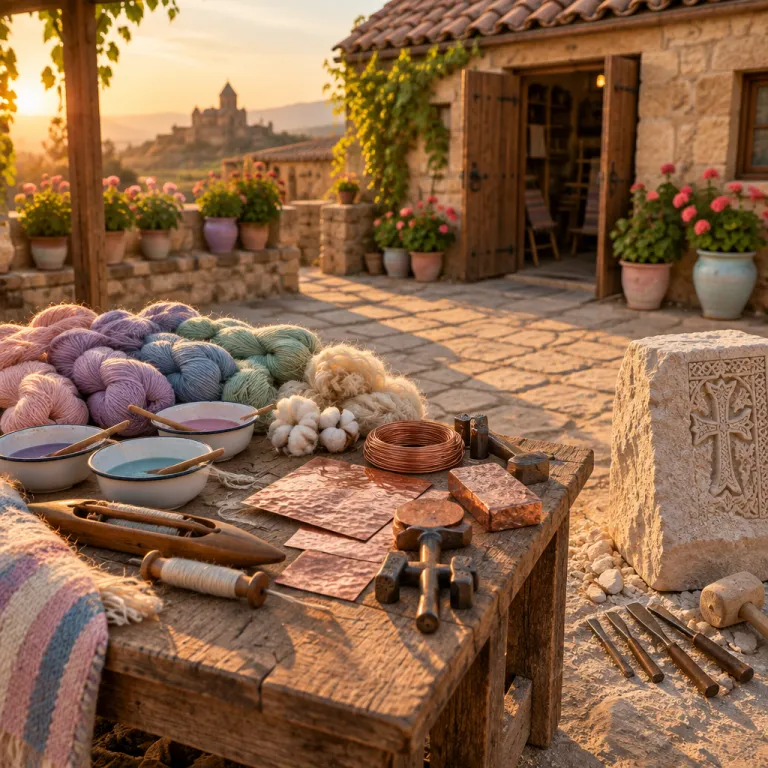
Why armenian crafts belong at the heart of your itinerary
Armenia is not a backdrop for quick selfies ; it is a living workshop where every thread, stone and metal surface carries memory. For travelers used to luxury hotels and curated itineraries, armenian craft workshops travel offers a deeper lens on armenian culture than any checklist of monuments, because the loom, the chisel and the hammer reveal how people actually live. In Yerevan Armenia and in the older streets of Gyumri, you feel that what began years ago in village homes still shapes how local families work, host and welcome guests today.
Think of carpets, carved stone and copperware not as souvenirs but as three parallel archives of Armenia, each one telling a story that the church frescoes and museum labels only hint at. Carpet weaving preserves regional myths and family histories in wool and natural dyes, while stone carving around every church door encodes theology and village pride in lace like patterns. Copper and gold work, from hammered trays to filigree jewellery, reflects trade routes, religious symbolism and the quiet confidence of a culture that has negotiated empires without losing itself.
For the solo explorer planning several days in Armenia, the most rewarding travel strategy is to let these crafts shape your route between hotel stays, monasteries and landscapes. A morning in a Yerevan studio, an afternoon near Khor Virap or another virap monastery, and an overnight near Lake Sevan can turn a standard tour into a narrative that links carpets, khachkars and metalwork with Mount Ararat on the horizon. This is where a well connected hotel concierge or a trusted guided tour organizer becomes essential, helping you find working workshops rather than staged demonstrations for large groups of travelers.
On the loom: carpets, textiles and the quiet power of pattern
Carpet weaving in Armenia is not a nostalgic hobby ; it is a sophisticated language that experienced weavers speak as fluently as the Armenian language. When you step into a working weaving studio in Yerevan or Gyumri, you see how armenian carpets and other textiles are planned like architectural drawings, with every border and motif carrying a specific meaning. For travelers who care about context, these workshops turn armenian craft workshops travel into a master class in visual storytelling.
Look closely at the carpets hanging beside the looms and you will notice how certain symbols echo what you saw in church stonework or manuscript illuminations earlier in your tour. Many armenian crafts share this vocabulary of crosses, pomegranates and stylized animals, and the weavers will often explain how their grandmothers taught them to read these signs years ago. Ask to learn the basics of knotting during a short master class and you will understand why a single square metre can take days of concentrated work, especially when natural dyed wool and complex patterns are involved.
Luxury travelers often combine a morning at a weaving workshop with a slow breakfast back at their hotel, using the quiet time to reflect on what they have seen and to decide whether to commission a piece. If you plan your travel around textiles, choose a refined bed breakfast in Yerevan Armenia for urban studios, then a characterful property in Gyumri for access to more traditional armenian carpets and village style crafts. For more ideas on how to weave cultural experiences into a refined city and countryside escape, explore this guide to unforgettable things to do in Armenia for a refined city and countryside escape, and then speak with your concierge about arranging small group visits rather than rushed bus tours.
In stone: khachkar carving, sacred walls and the weight of time
Khachkars, the intricately carved cross stones that stand beside almost every historic church in Armenia, are not museum pieces ; they are active participants in a culture religious landscape. When you visit a stone carving studio, often tucked behind a modest gate in Yerevan or near a monastery, you see how artisans translate theology and grief into patterns that feel almost like lace in tuff. For many travelers, this is the moment when armenian craft workshops travel shifts from pleasant pastime to something closer to pilgrimage.
A guided tour that links a working stone carving atelier with a visit to Khor Virap or another virap monastery allows you to read the khachkars on site with new eyes. The artisan may show you how a simple chisel and mallet can, over many days, produce the same dense geometry you see in centuries old stones near Mount Ararat. When you stand between the studio and the churchyard, you realize that armenian crafts are not frozen in time ; they are a continuous conversation between past and present, between faith, landscape and the hands of local artisans.
From a hospitality perspective, the smartest move is to choose a hotel that understands this depth and can arrange respectful access to working carvers rather than tourist only demonstrations. Some luxury properties near Yerevan Armenia and along the route toward Lake Sevan now collaborate with small group guides who prioritize quiet observation over intrusive photography. If you are planning a romantic itinerary that balances sacred sites, craft and landscape, you can pair these studio visits with more contemplative experiences suggested in this guide to sunset hikes and vineyard suppers, then return to your room with stone dust still in your memory.
Fire and metal: copper, gold and the sound of the hammer
Step into a coppersmith’s workshop in Yerevan or Gyumri and the first thing you notice is the sound, not the shine. The steady rhythm of hammer on metal, the hiss of quenching water and the low conversation in Armenian language create a kind of industrial music that anchors your armenian craft workshops travel in the present tense. Here, armenian crafts are not curated behind glass ; they are stacked on benches, hanging from rafters and cooling on stone floors.
Many of these workshops produce the copper trays, coffee sets and church vessels you see in hotels, restaurants and monasteries across Armenia, and some also collaborate with goldsmiths on finer jewellery. A good guided tour or private master class will let you learn how a flat sheet becomes a curved bowl, how patterns are chased into the surface and how traditional armenian motifs migrate from carpets to metal. When you hold a finished piece, you can almost feel the years ago when similar objects travelled along trade routes that linked Armenia to Persia, the Levant and beyond.
For travelers who value comfort as much as authenticity, the key is to base yourself in a hotel that treats these visits as part of its cultural program rather than as optional extras. Ask the concierge to help you find studios where local artisans are genuinely at work, and request small group appointments timed between breakfast and late afternoon, when the light in the workshops is at its best. If your itinerary includes Lake Sevan or other regional hubs, consider properties highlighted in this overview of luxury stays near heritage sites in Armenia, then build in a day or two where metal, stone and textiles frame your travel rather than simply filling gaps.
Pairing place and stay: Yerevan, Gyumri and Lake Sevan
Choosing the right hotel in Armenia is not only about thread count ; it is about how well the property connects you to the crafts that define armenian culture. In Yerevan Armenia, design forward hotels near the historic core make it easy to walk from your breakfast table to nearby weaving studios, metal workshops and small galleries that showcase armenian carpets and textiles. Many of these properties can arrange a tailored tour that links urban studios with an afternoon visit to a church or museum, so your armenian craft workshops travel feels coherent rather than fragmented.
Gyumri offers a different rhythm, with cobbled streets, 19th century facades and a quieter pace that suits travelers who want to learn in depth from local artisans. Here, a characterful bed breakfast or a restored townhouse hotel can anchor days spent moving between stone carving yards, doll making studios and small metal shops, often within walking distance. The city’s layered history means that crafts, church architecture and everyday life sit side by side, giving you a more intimate sense of how traditional armenian skills survived earthquakes, wars and political shifts.
Lake Sevan and its surrounding villages add yet another layer, especially if you are interested in how crafts intersect with landscape and monastic life. A lakeside hotel with strong ties to nearby communities can help you find weavers, woodworkers and carvers who balance seasonal work with tourism, often welcoming small group visits rather than large buses. Plan at least two or three days in this region so that your travel between workshops, monasteries and shoreline paths never feels rushed, and so that each evening’s quiet view of water and sky can settle what you have learned during the day.
Visiting respectfully and buying well: from workshop to hotel room
Respectful armenian craft workshops travel begins with the understanding that you are entering workplaces, not staged sets. When you arrive with a guide or through your hotel, greet artisans in Armenian language if you can, ask permission before taking photographs and stay aware that they are balancing your curiosity with production deadlines. Many travelers find that a slower pace, with time to watch in silence, leads to more meaningful conversations about armenian culture, faith and family.
When it comes to buying, quality and provenance matter more than bargaining prowess, especially with carpets, textiles and metalwork that may have taken many days to produce. Look for clear explanations of materials, dyes and techniques, and do not hesitate to ask whether a piece was made in that workshop or sourced from elsewhere in Armenia. Serious local artisans are usually proud to explain how their craft connects to specific regions, church commissions or family traditions, and your hotel can often help you learn how to recognize hallmarks of authentic armenian carpets, fine stone carving or well balanced copperware.
Thoughtful hospitality teams now see themselves as bridges between travelers and makers, curating experiences that feel generous rather than extractive. A concierge who knows the difference between a quick tourist stop and a genuine master class can transform your days, ensuring that your spending supports sustainable workshops rather than anonymous resellers. As you return to your room each evening, perhaps with a small textile, a copper coffee pot or a carved stone fragment, you carry not just an object but a thread that ties your stay in Armenia to the loom, the khachkar and the copper bench where it began.
FAQ
How many days should I plan for craft focused travel in Armenia ?
For a balanced itinerary that includes armenian craft workshops travel, plan at least five to seven days in Armenia. This allows time for Yerevan studios, a day in Gyumri and an overnight near Lake Sevan without rushing. With more days, you can add visits to church sites such as Khor Virap or other monasteries that connect directly to stone carving traditions.
Can solo travelers safely visit workshops in Yerevan and Gyumri ?
Solo travelers generally find Yerevan and Gyumri welcoming and manageable, especially when visits are arranged through a reputable hotel or guide. Many local artisans are accustomed to hosting individuals or small group guests rather than large tours. Using a guided tour service or concierge introduction helps ensure language support and respectful access to working spaces.
Do I need to speak Armenian language to engage with local artisans ?
You do not need to speak Armenian language, but learning a few greetings is appreciated and opens doors. In Yerevan Armenia, many younger artisans speak some English or Russian, while in smaller towns your guide or hotel contact can translate. Simple gestures, patience and genuine interest in armenian crafts usually bridge any remaining gaps.
What is the best way to buy authentic armenian carpets and metalwork ?
The most reliable approach is to buy directly from workshops where you have seen the weaving, stone carving or metalwork in progress. Ask detailed questions about materials, techniques and how long each piece took to make, and request written details when possible. Your hotel or guide can help you find studios with strong reputations, so your purchases support local artisans and reflect genuine armenian culture.
Are craft workshops suitable for travelers interested mainly in religious heritage ?
Yes, craft workshops often deepen an interest in culture religious heritage, because many artisans work on church commissions and use sacred motifs. Visiting a stone carving studio before or after seeing khachkars at a monastery like Khor Virap helps you read the symbols more clearly. Similarly, carpets and metalwork often echo themes from liturgy and iconography, linking your craft experiences directly to Armenia’s spiritual landscape.