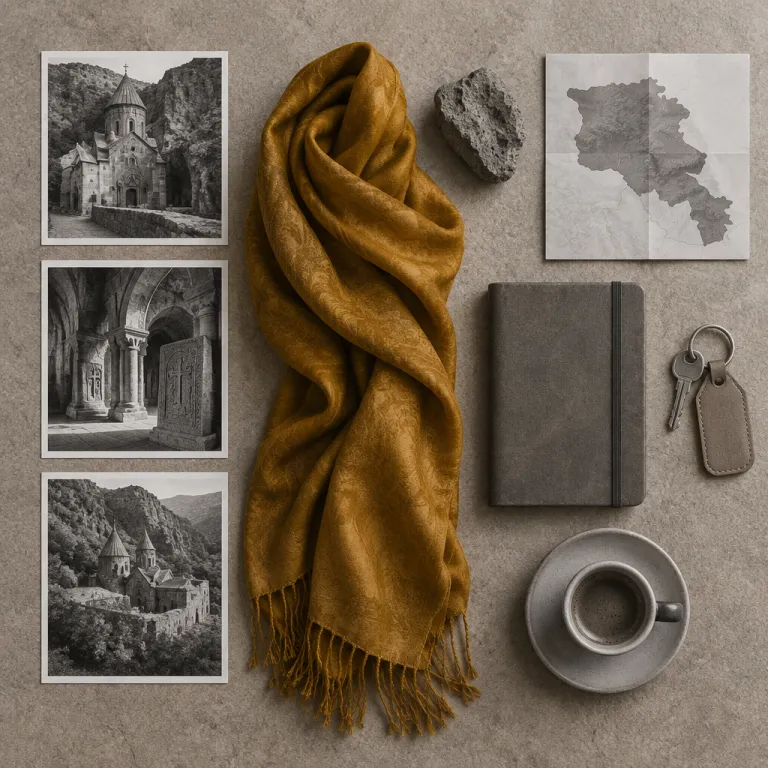
Geghard monastery in Armenia for luxury travelers
The Monastery of Geghard offers a rare union of sacred architecture and dramatic landscape. This medieval complex rises from solid rock in the Upper Azat Gorge, where the valley narrows into cliffs that frame every view. For luxury travelers, Geghard combines spiritual depth with refined experiences in nearby premium hotels and curated private tours.
The main monastery church is partly free standing and partly carved into the mountain, creating a powerful contrast between built stone and natural cave chambers. Within the complex, each sanctuary built in different century phases reveals how Armenian artisans mastered both cruciform plan layouts and intricate reliefs. When you walk from the main church into the darker cave sanctuaries, the shift from daylight to candlelight feels like crossing a threshold between worlds.
This UNESCO World Heritage property is one of the most important heritage sites Armenia offers to discerning visitors. Many travelers pair a visit to Geghard with the nearby Temple of Garni, creating a single itinerary that spans pagan and Christian sites in one day. For guests staying in luxury properties in Yerevan or in Kotayk Province, private drivers and curated excursions make the journey to this historic monastic valley effortless.
Heritage, legends, and the sacred landscape around Geghard
The story of Geghard Monastery is inseparable from its legends and relics. The name “Geghard” comes from the “spear” (geghard in Armenian), traditionally linked to the Holy Lance that pierced Christ’s side and was once kept in this sanctuary. Today the relic is preserved at the Mother See of Holy Etchmiadzin, as noted by the Armenian Apostolic Church and UNESCO, yet the association still shapes how pilgrims and travelers experience the holy atmosphere of the site.
Early tradition connects the area with Gregory the Illuminator, the Armenian saint who helped establish Christianity as the state faith. Over successive century periods, Armenian princes and noble families expanded the monastery complex, turning a small cave chapel into a sophisticated ensemble of churches, tombs, and service rooms. The Proshian (also spelled Proshyan) family, a powerful medieval dynasty, commissioned several of the most refined rock-cut chapels and reliefs that visitors admire today, a detail recorded in Armenian inscriptions and highlighted in the UNESCO World Heritage Centre description of the site.
Set within the Upper Azat and wider Azat Valley, the monastery landscape feels like a natural amphitheater for worship. Sheer rock walls rise above the main church and smaller cave sanctuaries, while a sacred spring flows quietly inside one of the inner chambers. Luxury travelers often choose premium stays in the Ararat region or Yerevan, then arrange tailored excursions to this UNESCO-listed jewel through high-end tour operators and curated luxury stays near sacred heritage sites.
Architecture in solid rock: from main church to hidden caves
Architecturally, the Monastery of Geghard is a masterpiece of carved and constructed space. The main church, a free standing structure of finely cut stone, follows a cruciform plan typical of medieval Armenian ecclesiastical design. Around it, a network of cave chapels and service rooms carved directly into solid rock demonstrates extraordinary engineering skill and artistic ambition.
Several of these cave spaces form a multi level monastery complex where light filters through small openings in the rock. In one chamber, a sacred spring emerges from the carved rock floor, its water long considered holy by local worshippers and visiting pilgrims. A guide might invite you to stand in the center of a domed cave chapel and speak softly, so you can hear how the acoustics carry a single word to every corner of the room. One local guide describes it as “a stone instrument tuned over centuries,” a phrase that captures the almost musical quality of the space. The contrast between the main church built in masonry and the darker rock hewn interiors gives the site a layered, almost theatrical character.
For travelers interested in architecture, the interplay of cross shaped floor plans, domes, and cliff faces makes this site one of the most compelling heritage sites Armenia presents. Luxury guests can enhance their visit by booking expert led private tours that explain how Armenian builders translated theological ideas into stone and cave. When planning where to stay, consult a detailed guide on how to choose a luxury hotel in Armenia so your base matches the depth of your cultural itinerary.
Pairing Geghard and Garni with luxury and premium stays
Many travelers structure their day around Geghard Monastery and the nearby Temple of Garni. The Temple of Garni, a classical colonnaded sanctuary, stands on a rocky promontory above the Azat Valley and contrasts beautifully with the Christian monastery complex at Geghard. Visiting both heritage sites in one day reveals how Armenian culture bridged pagan and Christian eras while always engaging with the surrounding rock landscape.
From a luxury travel perspective, this pairing allows you to balance time at a holy monastery with leisurely moments at upscale properties. Guests often depart from Yerevan or Kotayk Province in the morning, visit the Temple of Garni first, then continue to the Geghard complex when the light softens in the gorge. Private guides can highlight how each century left its mark on the main church, the cave chapels, and the carved rock reliefs that decorate the walls.
Families and couples seeking premium comfort can choose from a range of high end hotels and refined guesthouses within easy driving distance. For example, The Alexander, a Luxury Collection Hotel in Yerevan, offers butler service, a spa, and concierge teams used to arranging private cultural excursions, while the Armenia Marriott Hotel Yerevan provides club-level lounges and driver services suitable for day trips to Garni and Geghard. To optimize your itinerary, use a region by region guide on where to stay in Armenia and align your base with the heritage sites you value most. This approach ensures that your experience of Geghard monastery in Armenia feels both spiritually rich and logistically seamless.
Planning a refined visit: timing, access, and private experiences
Thoughtful planning transforms a visit to Geghard into a truly elevated experience. Arriving early in the day or later in the afternoon helps you appreciate the monastery complex with fewer crowds and softer light on the rock walls. Many luxury travelers arrange private transfers, allowing them to move comfortably between their hotel, the Temple of Garni, and the surrounding monastic valley.
The road from Yerevan into Kotayk Province follows the Azat Valley, gradually revealing the cliffs that shelter this holy site. As you approach, the silhouette of the main church appears against the rock, while small chapels and cave openings become visible along the slopes. Inside, you can pause at the sacred spring, trace the carved cross motifs on the walls, and observe how each church built in different century phases reflects evolving Armenian aesthetics.
Families with children often appreciate the compact scale of the monastery complex, which feels intimate yet monumental. Private guides can adapt explanations to different age groups, making the story of Gregory the Illuminator, the Proshian family, and the monastery spear accessible and engaging. For guests seeking extra privacy, some premium operators such as Hyur Service or Armenia Travel arrange exclusive access hours or curated musical performances in the acoustically rich cave chapels.
Choosing luxury accommodation for a heritage focused itinerary
Selecting the right luxury or premium hotel is essential when Geghard monastery in Armenia is a highlight of your journey. Many visitors base themselves in Yerevan, enjoying five star comfort while taking a day trip to the monastery complex and the Temple of Garni. Others prefer refined properties in Kotayk Province or the Ararat region, shortening the drive and immersing themselves more fully in the Azat Valley landscape.
When evaluating hotels, consider how well each property supports your visits to heritage sites Armenia offers. Look for concierge teams experienced in arranging private excursions to the Geghard area, including expert guides who can interpret the cruciform plan of the main church and the symbolism of each carved cross. High end properties often collaborate with local historians and cultural institutions to provide deeper context for the holy sites on your itinerary.
For families, interconnecting rooms, flexible dining, and child friendly services make early departures for Geghard and Garni more comfortable. Couples may prioritize spa facilities and quiet lounges where they can reflect on the carved rock interiors and sacred spring they experienced during the day. Whatever your preference, aligning your accommodation with your cultural priorities ensures that every moment around Geghard monastery in Armenia feels coherent and thoughtfully curated.
Respectful visiting: culture, spirituality, and family friendly etiquette
Geghard remains an active place of worship, so respectful behavior is essential. Dress modestly, speak softly inside the main church and cave chapels, and avoid obstructing worshippers while taking photographs. Families should prepare children in advance, explaining that this holy sanctuary is both a heritage site and a living spiritual center.
Lighting a candle, tasting water from the sacred spring, or quietly tracing a carved cross on the wall can be meaningful gestures for visitors of any background. Guides often explain how Gregory the Illuminator and later Armenian saints shaped the religious identity of this monastery complex over each century. The presence of the Proshian family tombs and the memory of the monastery spear further underline the deep historical layers embedded in the solid rock.
Luxury travelers can enhance their understanding by engaging local experts who specialize in Armenian church history and architecture. These specialists clarify how the cruciform plan of the main church relates to broader Christian symbolism, and how the carved rock interiors differ from free standing structures elsewhere in Armenia. Such insight turns a simple visit to Geghard monastery in Armenia into a nuanced encounter with one of the most significant heritage sites Armenia offers.
Key figures and travel statistics for Geghard and Garni
- Geghard Monastery and the Temple of Garni together attract a large share of international visitors to Armenia each year, making this pair one of the most visited cultural routes in the country, according to summaries published by the Armenian Tourism Committee and national tourism statistics.
- The distance from central Yerevan to Geghard monastery is approximately 40 kilometers, which usually translates into a drive of about one hour depending on traffic and seasonal road conditions, as reflected in official visitor information.
- The elevation of the Azat Valley near the monastery complex is around 1,300–1,500 meters above sea level, contributing to cooler temperatures compared with the Ararat plain during peak summer months, as noted in regional geographic surveys and UNESCO documentation.
- Many organized day tours allocate between two and three hours on site at Geghard, allowing time to visit the main church, several cave chapels, and the sacred spring without rushing, a pattern reflected in typical tour operator itineraries.
- Surveys by Armenian tourism bodies indicate that a significant share of high spending visitors combine Geghard and Garni with at least one night in a luxury or premium hotel, often in Yerevan or Kotayk Province, to balance cultural depth with comfort.
FAQ about Geghard monastery in Armenia for luxury travelers
How far is Geghard monastery from Yerevan, and is a day trip realistic ?
Geghard monastery lies about 40 kilometers from central Yerevan, and the drive usually takes around one hour each way. A day trip is entirely realistic, especially when arranged through a luxury hotel or private operator. Many travelers combine the monastery complex with the nearby Temple of Garni in a single, well paced itinerary.
Can I visit Geghard monastery with children and older family members ?
The monastery complex is generally suitable for families, though surfaces can be uneven and some cave chapels require short climbs. Older family members may prefer to focus on the main church and nearby areas, which are easier to access. Private guides can adapt the pace and route to match your group’s mobility and interests.
What should I wear when visiting this holy site in Armenia ?
Modest clothing is recommended, with shoulders and knees covered for both men and women. Comfortable walking shoes are important because paths around the Geghard area can be rocky and sometimes slippery. A light jacket or shawl is useful inside the cooler cave chapels, even during warmer months.
Which luxury hotels are best for visiting Geghard and Garni ?
Many visitors choose five star or premium hotels in Yerevan, which offer easy access to private drivers and expert guides. Others select refined properties in Kotayk Province or the Ararat region to shorten travel time to the Azat Valley and surrounding heritage sites. When choosing, prioritize hotels with strong concierge services and proven experience organizing cultural excursions.
Is it possible to attend religious services at Geghard monastery ?
Services are held regularly because Geghard remains an active Armenian Apostolic monastery. Attendance is usually possible for respectful visitors, though schedules can vary with church calendars and local events. Your hotel concierge or local guide can confirm service times and advise on appropriate etiquette for participation.
Sources : Armenian Tourism Committee; UNESCO World Heritage Centre, “Monastery of Geghard and the Upper Azat Valley”; Mother See of Holy Etchmiadzin.